Our Roast Guide
Welcome to our Roast Guide. The Roast Guide is part two of our myroast™ guides developed to help you gain an understanding of everything coffee!
Whether you're a seasoned coffee drinker or just starting to explore the world of coffee, our guides are here to help you understand everything from the basics to the nuances of coffee brewing.
Want a quick visual reference? Check out our Coffee Roast Level Flavour Chart — a handy guide to what flavours to expect from each roast level.
Ready to start discovering the range of coffee on offer now?

The coffee beans we know
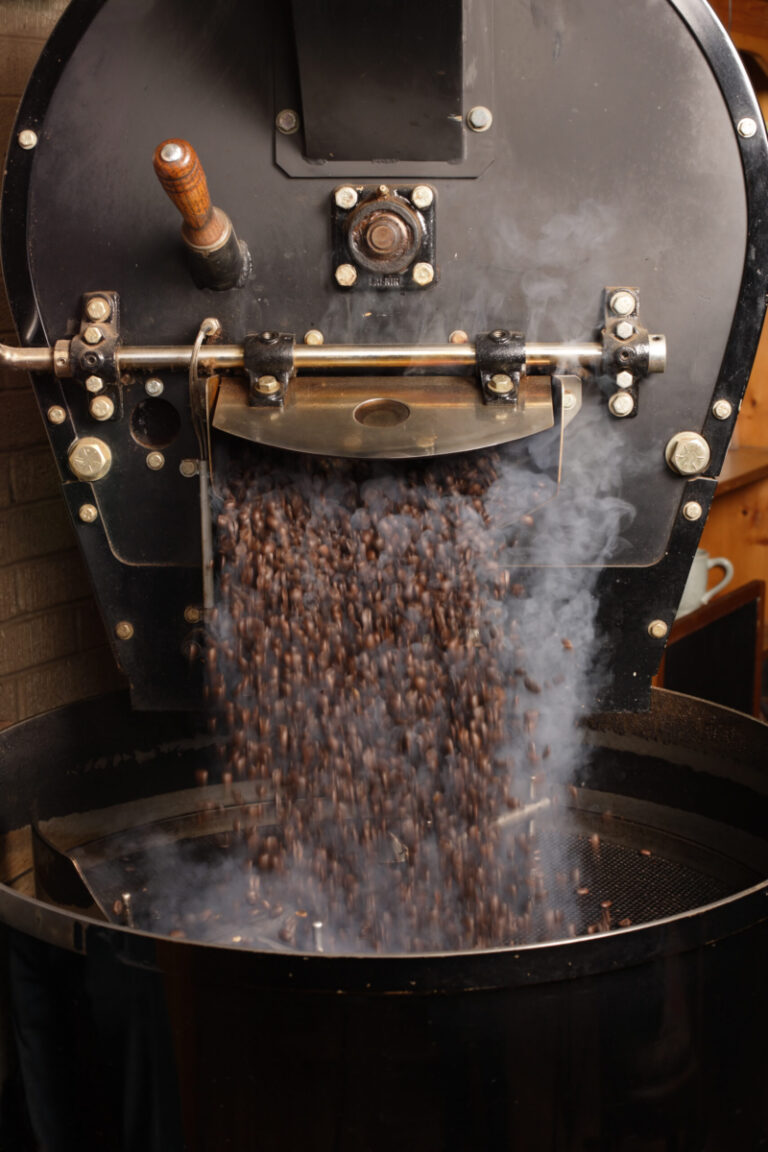
Roasting is the process of heating, that turns coffee into the fragrant, dark brown beans that we know.

Why is roasting important?
Coffee beans are ‘green’ and raw in their unprocessed state and can be stored without loss of quality or taste. Roasting brings out the flavour and aroma locked inside raw coffee beans. Raw coffee beans have none of the characteristics of a roasted coffee bean and are as you would expect any plant like material – soft and spongy and without the trademark coffee smell.
When coffee beans are roasted rapidly at very high temperatures, chemical changes take place. When they reach their desired heat range, they are quickly cooled to stop the process. At this point, they take on the characteristics of the coffee bean we know and love. Roasted coffee beans smell fragrant and weigh less because the moisture has been taken out with heat, they are crunchy to bite, and ready to be ground and brewed.
Roast types
While a number of specialty coffee roasters will have specialized names for their flavoured roasts, and a lack of standardization can cause confusion, in general roasts fall into one of four categories – light, medium, medium-dark and dark. Within each of these you may come across several variations, and we outline these within the categories below.
While many assume the strong, rich flavour of darker roasts indicates high levels of caffeine, it is in fact to the light roasts which have higher concentrations. Our choice in roast is often personal, but if the roast is not declared by the supplier, it is a good idea to clarify as there can be a world of difference between them. See our Roast Level Flavour Chart for a detailed breakdown of flavour profiles across every roast.
Light Roasts.
Light roast are light brown in colour, this roast is generally preferred for milder coffee varieties. There will be no oil on the surface of these beans because they are not roasted long enough for the oils to break through to the surface. Variations include light city, half city and cinnamon.
Medium Roasts.
Medium roasts are, you guessed it, medium brown in colour. They have a stronger flavour and a non-oily surface. It’s often referred to as the American roast because it is generally preferred within the USA. Variations include city, American and breakfast.
Medium-Dark Roasts.
Medium-dark roasts have a rich, dark colour, this roast has some oil on the surface and with a slight bittersweet aftertaste. Variations include full city.
Dark Roasts.
Dark roasts, often the preferred roast for many brewing methods including espresso, this roast produces shiny black beans with an oily surface and a pronounced bitterness. The darker the roast, the less acidity will be found in the coffee. Dark roast runs from slightly dark to charred, and the names are often used interchangeably. Variations include high, continental, New Orleans, European, espresso, Viennese, Italian or French.
Light
Light brown in colour
Mild flavour
Delicate and subtle
Bright acidity
Medium
Medium brown in colour
Balanced flavour
Sweet and pronounced
Lower acidity
Medium-Dark
Darker brown in colour
Bold flavour
Heavier body
Lower acidity again
Dark
Blackish-brown in colour
Strongest flavour
Pronounced bitterness
Lowest acidity
Tip: Roasted coffee beans should be used as quickly as possible before the freshness of the roasted flavour begins to diminish. Alternatively, consider effective storage solutions which lock in the flavour!
Does the roast date matter?
There is a lot of debate around what the ideal number of days should be to consume coffee once your coffee beans have been roasted. Most coffee experts consider freshness only lasts between one to four weeks. But, take note that consuming coffee immediately upon roasting may also have a negative affect on brewing due carbon dioxide build up within the roasted coffee beans which will dissipate after a few days. The ideal time to brew is suggested to be between 8 to 20 days.
The best specialty coffee roasters will include the roast date on the packaging, or declare the roasting period at the time of purchase, so keep an eye out for this to guarantee freshness. We recommend our vendors include the roasting date.
To take advantage of freshness:
- Consider purchasing in small amounts, based on your consumption;
- Brew your coffee within 30 minutes of grinding
- Keep your coffee beans in a cool, dry place (airtight storage container)
Have you seen all the myroast™ guides?
Want to learn more? Explore the guides and get the insights to make an informed decision.